


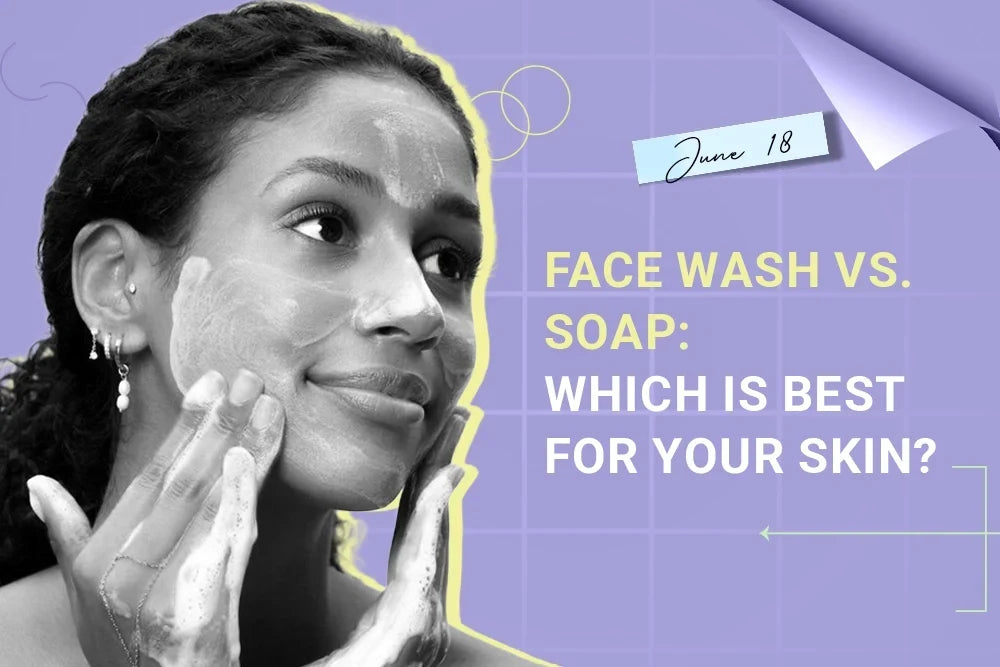
Have you ever washed your face with the same soap you use for your body because it was convenient? Or wondered whether you really need a separate face wash?
It is a common question because both products clean your skin. But when you compare face wash vs soap, the difference goes beyond removing dirt. The cleanser you use every day can affect your skin barrier, oil production, and breakouts. If you are confused between a face wash or soap, here is what you need to know.
Face Wash vs Soap: What Is the Difference?
Both soap and face wash remove dirt, sweat, and excess oil, but they are formulated differently.
Traditional soap is made by combining oils or fats with alkaline ingredients, giving it a much higher pH than your skin. A face wash is specially designed for the delicate skin on your face. It uses gentle cleansing agents to remove impurities while helping maintain your skin barrier. Many formulas are also designed to target concerns like acne, dullness, or excess oil.
This is the biggest difference between face wash and soap.
Is Face Wash Better Than Soap? Does Soap Damage the Skin Barrier?
Yes. In most cases, a facial cleanser is the better choice because your facial skin is thinner and more delicate than the skin on the rest of your body.
Your skin barrier locks moisture into your skin while protecting it from pollution, bacteria, and irritants. It also supports the healthy microorganisms that naturally live on your skin.
Regular soap has a much higher pH than your skin. Repeated use can disturb this protective barrier, making it harder for your skin to retain moisture and recover from daily stress.
Over time, this may lead to:
-
Dryness and tightness
-
Flaky skin
-
Increased sensitivity
-
Excess oil production
If your skin feels tight after washing, it often means your cleanser has removed too much of your skin's natural oil.
Why Does pH Matter?
Healthy skin has a naturally slightly acidic pH of around 4.5 to 5.5. This helps your skin barrier stay strong and reduces moisture loss.
A pH-balanced face wash is formulated closer to your skin's natural pH. It removes dirt, sunscreen, pollution, and excess oil without disrupting your skin barrier like regular soap can.
Can Face Wash Prevent Acne?
Yes, it can help reduce the chances of acne by removing excess oil, sweat, dead skin cells, and impurities before they clog your pores. However, cleansing alone cannot treat every cause of acne.
Harsh soap may strip your skin too much, causing it to produce even more oil. A gentle cleanser keeps pores clean while supporting your skin barrier.
A Face Wash for Oily and Acne-Prone Skin
Pore-Clearing Wash

If excess oil and clogged pores are your biggest concerns, your cleanser should help control oil without leaving your skin feeling stripped. This face wash uses 1% salicylic acid to unclog pores and reduce active acne, while glycolic acid removes dead skin buildup that contributes to congestion. Aloe vera and centella asiatica help calm visible redness, making it suitable for daily cleansing.
Which Cleanser Should You Choose?
Your cleanser should suit your skin type.
-
Oily skin: Choose lightweight gel or foaming cleansers that remove excess oil without over-drying.
-
Dry skin: Use gentle, non-drying cleansers that help retain moisture.
-
Combination skin: Choose a cleanser that balances oily and dry areas.
-
Sensitive skin: Pick gentle formulas that support the skin barrier and minimise irritation.
A Gentle Cleanser for Everyday Use
Vitamin C Clarifying Cleanser

A daily cleanser should do its job without disrupting your skin barrier. This cleanser uses a sulphate-free gel-to-foam formula that cleanses gently while tea tree oil helps reduce excess sebum. Acerola cherry supports brighter-looking skin, and witch hazel helps calm visible inflammation without leaving your skin feeling tight after cleansing.
How Often Should I Wash My Face?
For most people, it is twice a day. Cleanse once in the morning to remove overnight oil and again before bed to remove sunscreen, sweat, pollution, and other impurities. If you exercise or sweat heavily, cleanse afterwards as well.
Choose a Cleanser That Supports Your Skin
When comparing face wash vs soap, which is better, the answer is simple. Your facial skin needs gentle cleansing that protects its natural barrier instead of stripping it. Choosing the right skincare cleanser helps maintain healthier skin, making it better prepared for the rest of your skincare routine.