





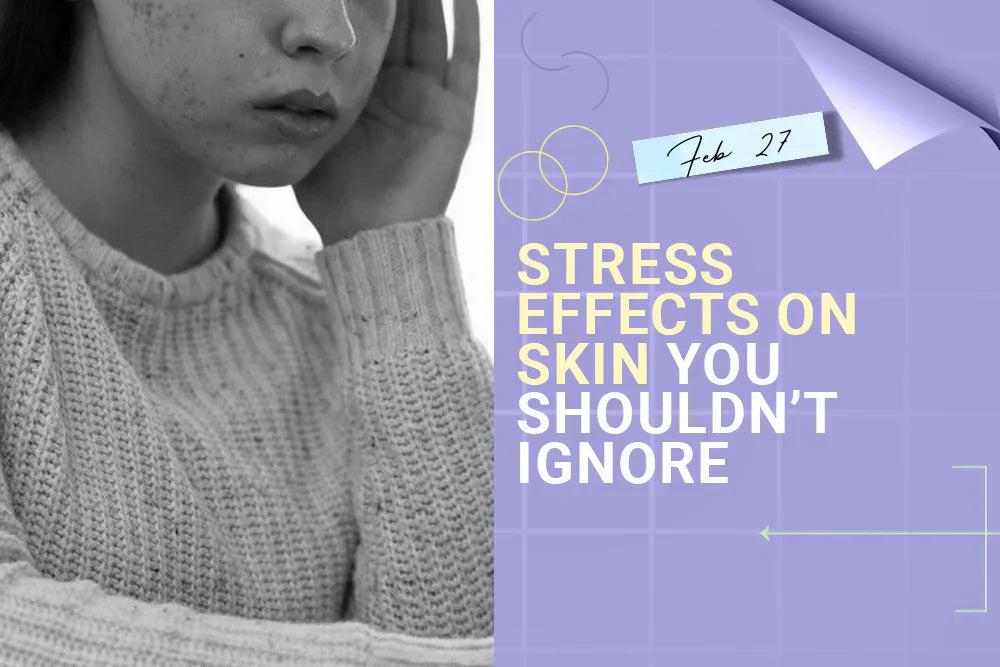
We all deal with some form of stress in our lives; it is inevitable. However, when you are chronically stressed, its effects are not just limited to your emotional well-being but also start showing on your skin.
While we cannot entirely escape the worries of life, we can definitely better manage the effects of stress on the skin.
Let’s see how.
Are Stress and Skin Problems Really Related?
Your skin and brain are related through a two-way communication channel called the skin-brain axis. They pass signals to each other through nerves, hormones, and your immune system.
So when you are under stress, your brain signals your adrenal glands to produce more cortisol and catecholamine hormones. Cortisol is the primary stress hormone that increases oil production in the skin and breaks down collagen and elastin. Catecholamines, on the other hand, reduce blood flow to the skin, damage skin cells, and slow down the barrier repair function.
Common Skin Problems Due to Stress
If you live in a chronically tense state, you can notice multiple stress symptoms on the skin. In fact, your skin is one of the first organs to reflect your emotional state because it acts as a receptor to cortisol and catecholamine. You should not ignore these stress effects on the skin. They are not just superficial problems, but an indicator of what your body is going through on the inside.
-
Acne and Breakouts
When cortisol levels increase in the body, it triggers the sebaceous glands to produce more oil. The excess oil then clogs your pores and gets trapped with dirt and impurities, leading to acne, whiteheads, and blackheads. Stress-induced acne often shows up around your chin and jawline.
-
Premature Ageing
Collagen provides your skin with its strength, firmness, and structure, whereas elastin provides the flexibility to stretch. Excess cortisol breaks down your collagen and elastin, leading to fine lines, wrinkles, and skin sagging.
-
Disrupted Skin Barrier Function
Your skin barrier needs lipids and ceramides to repair itself, but cortisol disrupts their production. Additionally, your immune system slows down under stress, further delaying the skin barrier repair. As a result, your skin loses more moisture and becomes dull, dry, and irritated.
-
Disrupted Sleep Cycle
Disrupted sleep is one of the major causes of stress effects on the skin. We tend to sleep less under stress, which slows down the production of vital growth hormones that your skin needs to repair itself. As a result, wound healing slows down, and you may get puffy eyes and dark circles.
-
Skin Diseases and Inflammation
Catecholamine induces inflammatory responses in the body. Prolonged inflammation disrupts the immune system, causing it to dysfunction, allowing pathogens to enter the body and damage the skin barrier. As a result, chronic stress can flare up certain skin diseases like hives, rosacea, eczema, and psoriasis if left ignored.
-
Stress-Induced Skin Habits
Under stress, people often tend to touch their faces and scratch their skin more. It allows the bacteria on your hand to transfer to your face, worsening your acne. You may also reduce your water intake, incline towards unhealthy food, skip exercises, and start avoiding skincare, further affecting the skin.
How To Manage Stress Effects On The Skin?
Your skin and brain can get into a vicious loop during stress. While stress induces skin problems, skin problems further send inflammatory signals to the brain, causing more stress. However, with little practice, you can better manage your stress and improve your skin health.
-
Try to go to bed around 10 or 11 pm when your body is in repair mode and sleep for at least 7 hours.
-
Practice yoga, breathing exercises, brisk walks, jogging, or any other light physical activity to release more endorphins (the feel-good chemicals) and lower cortisol.
-
Drink plenty of water to let your nervous system know it's safe and help it come out of fight or flight mode
-
Continue practicing basic skincare, even if it just involves washing your face, applying a moisturiser, and sunscreen to manage stress symptoms on your skin.
-
If you have been in a chronic state of stress, seek professional help. Cognitive behavioural therapy and other psychotherapy techniques equip you with evidence-based strategies to help cope with stress.
Stress Effects on Skin Are A Signal For Help
Your skin is a mirror that reflects whatever happens inside your body. If you are under chronic stress, it will show up as acne, inflammation, and skin diseases. Similarly, if you are more at peace, your skin appears healthier and rejuvenated.
However, it's not just about your skin but your overall well-being, including your physical, emotional, and mental health. While you can always visit a dermatologist for recurring skin concerns, you also need to address the root cause by managing stress through rest, mindful habits, and self-care.
Remember, healing your skin starts with taking care of yourself from within.