



A Dry-Skin Reality Check No One Talks About
There’s a very particular kind of panic that only dry-skin people understand.
You try something new — hoping for glow, hoping for brightness — and within minutes your face feels tight, almost like your skin is holding its breath.
And because Vitamin C has become the “glow girl’s holy grail,” it’s the first thing you want to blame.
But here’s the quiet truth nobody really says out loud:
It’s not always the Vitamin C. It’s everything around it.
Let’s break this down gently, with honesty, and with the kind of context dry, sensitive skin has been begging for.
Dry Skin Isn’t Just a Skin Type — It’s a Daily State of Mind
If you have dry skin, you already live with a delicate balance.
Some days your moisturiser sinks in too quickly.
Some days your cheeks sting after washing.
Some days makeup clings to patches you didn’t know existed.
And on all those days, your barrier is whispering,
“Please be kind to me.”
So when you introduce an active — even a beloved one like Vitamin C — that imbalance becomes noticeable.
But dryness after Vitamin C doesn’t automatically mean Vitamin C caused it.
Read More: 9 Reasons to Make Vitamin C Serum Essential
So… Does Vitamin C Serum Actually Dry Out Skin?
Here’s the grounded, un-dramatic answer:
Vitamin C itself doesn’t dry out your skin. But the wrong Vitamin C can definitely feel like it does.
It’s not the ingredient.
It’s the formula, the strength, and the state of your barrier.
Let’s talk about the real culprits:
1. The Harsh Form of Vitamin C
L-Ascorbic Acid is effective and famous — and also notorious.
On dry or sensitive skin, it can create micro-irritation that feels like dryness.
2. High Concentrations That Overwhelm the Barrier
If you’re using 20%+ Vitamin C when your skin is already dehydrated, it’s like giving an intense workout to someone who hasn’t slept.
3. Water-Light Serums With Zero Hydration Support
Some formulas brighten but forget to comfort.
If your Vitamin C serum doesn’t include hydrating companions (HA, glycerin, panthenol), your skin notices immediately.
4. A Barrier That Needs Repair
Even the best product can feel drying if:
-
you’re exfoliating too aggressively
-
you’re using foaming cleansers
-
you’re skipping moisturiser
-
your skin is already compromised
Dryness is rarely about Vitamin C alone.
It’s about the overall story your barrier is telling.
But Is Vitamin C Good for Dry Skin? Yes — In the Right Hands
When done thoughtfully, Vitamin C is incredible for dry skin.
Because dry skin isn’t just thirsty; it’s often dull, uneven, and vulnerable to environmental stress.
Vitamin C steps in like a quiet, steadying friend.
How Vitamin C Supports Dry Skin
-
Gives back the brightness your skin struggles to hold
-
Helps soften rough textures
-
Protects your barrier from pollution
-
Supports collagen — something dry skin always craves
-
Works beautifully with hydrating routines
So no, Vitamin C isn’t the enemy.
The wrong Vitamin C is.
The Version of Vitamin C Dry Skin Actually Likes
The safest, kindest Vitamin C for dry skin is:
-
stabilised
-
gentle
-
buffered
-
hydrating
-
paired with barrier-friendly ingredients
-
lightweight but not drying
-
alcohol-free
-
fragrance-free
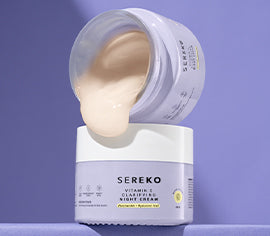
This is where SEREKO’s Vitamin C Clarifying Face Serum fits perfectly.
It isn’t the fiery, intense type of Vitamin C your skin has to “survive.”
It’s the kind your skin can quietly welcome — without bracing for irritation.
Read More: Is Vitamin C Face Wash Good for Your Skin?
Spotlight: Vitamin C Clarifying Face Serum (SEREKO)
This formula was built for the girl whose skin reacts to everything.
For the person who’s been scared to try Vitamin C again.
For the one whose dryness always comes first.
Why Dry Skin Loves It
-
Uses a gentle Vitamin C derivative that brightens without burning
-
Has hydrators that cushion your barrier
-
Designed to work without that tight, uncomfortable feeling
-
Calming enough for sensitive or eczema-prone patterns
It delivers glow, but more importantly — it delivers comfort.

How to Use Vitamin C When Your Skin Is Already Dry
Think of Vitamin C as a guest.
Your job is to create a welcoming environment.
Morning Routine That Works
-
Cleanse softly (no foaming drama)
-
Apply Vitamin C Clarifying Face Serum
-
Moisturiser that actually seals in moisture
-
A sunscreen built for dry skin — creamy, nourishing, no alcohol
Night Routine (If You’re Healing Your Barrier)
-
Cleanse
-
Use Vitamin C every alternate night
-
Follow with a thick, comforting moisturiser
-
Add a face oil if your skin needs extra softness
Three Rules Dry Skin Should Always Follow
-
Vitamin C goes on damp skin for better comfort
-
Always, always pair with moisturiser
-
Avoid mixing with strong exfoliants during the first week
Can Dry-Skin or Sensitive-Skin People Really Use Vitamin C?
Yes — they just need a gentler path.
The right Vitamin C doesn’t take from your skin; it gives.
It nourishes, stabilises, and strengthens.
It brings back the glow your dryness has muted.
You don’t need to avoid Vitamin C.
You just need a formula that respects your barrier.
The Honest Takeaway
Vitamin C does not inherently cause dryness.
But the wrong Vitamin C?
The too-harsh, too-strong, too-stripped kind?
Yes — it can make your skin feel uncomfortable.
Dry skin deserves a Vitamin C that understands its sensitivities, supports its barrier, and fits into a routine built around nourishment.
And when your serum does that, Vitamin C stops feeling like a risk —
and starts feeling like radiance.