


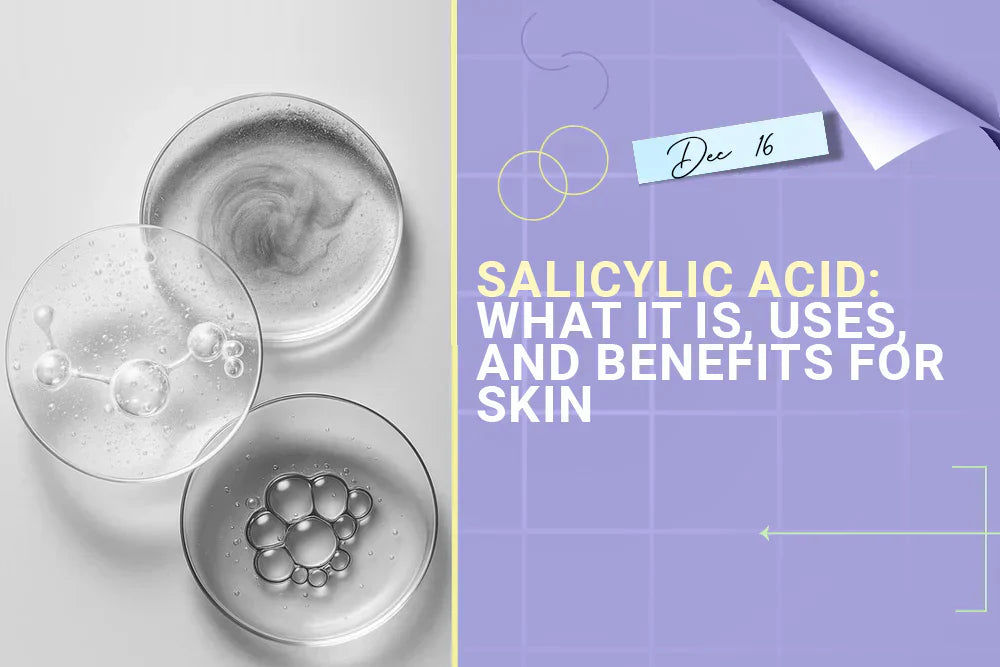
Salicylic Acid Doesn’t Shout. It Whispers — And That’s Why It Works.
Some ingredients announce themselves loudly.
They tingle. They sting. They promise overnight change.
Salicylic acid doesn’t do that.
It works quietly, patiently — almost invisibly. And yet, over time, it’s the ingredient people come back to when nothing else quite fixes the problem.
Breakouts that return.
Pores that never really feel clean.
Skin that looks fine… but never calm.
If salicylic acid has confused you, intimidated you, or dried you out once upon a time — you’re not alone. Most people don’t misunderstand the ingredient. They misunderstand how it’s meant to be used.
First, Let’s Clear the Air: What Salicylic Acid Actually Is
Salicylic acid is a BHA (Beta Hydroxy Acid) — and that one detail changes everything.
Unlike exfoliants that sit on the surface and polish away dead skin, salicylic acid is oil-soluble. Which means it moves through oil, into pores, and dissolves the kind of buildup you can’t scrub away.
It doesn’t scrape your skin clean.
It unclogs it from the inside.
That’s why salicylic acid serum, gel, cream, and even ointment formulas are often recommended for:
Acne that keeps coming back
Blackheads and whiteheads
Oily or combination skin
Congestion without visible pimples
It works where the problem begins — not where it shows up.
Why Salicylic Acid Feels Different From Other “Acne Ingredients”
Most acne treatments try to dry the skin into submission.
Salicylic acid doesn’t.
Instead, it loosens what’s trapped — oil, dead skin cells, debris — and lets the pore breathe again. That’s also why it helps with redness and inflammation. When pores aren’t suffocating, skin doesn’t panic.
Used well, salicylic acid:
Gently exfoliates without friction
Keeps pores clear over time
Reduces excess oil without stripping
Helps prevent future breakouts
That last part matters. Salicylic acid isn’t just corrective — it’s preventive.
Salicylic Acid Isn’t Just for Pimples
Somewhere along the way, salicylic acid got boxed into “spot treatment only.” That’s not the full picture.
Salicylic Acid Cream & Ointment Uses
In cream or ointment formats, salicylic acid is often used for:
Stubborn texture
Congested areas like the jawline or forehead
Body breakouts
Skin that feels thick or uneven
These formats work slower — but deeper — especially when congestion has been ignored for a while.
Salicylic Acid Serum Uses

A salicylic acid serum is ideal when:
Breakouts are frequent, not occasional
Skin gets oily by mid-day
Pores clog easily even with “good” skincare
Serums are where salicylic acid feels most modern — lighter, more refined, easier to use consistently.
Let’s Address the Question Everyone Is Actually Googling
Can I use salicylic acid every day?
The honest answer isn’t yes or no.
It’s it depends, and that’s not a cop-out.
Can Salicylic Acid Be Used Daily?
Yes, it can be used daily if:
The concentration is balanced
The formula supports the skin barrier
Your skin is oily or acne-prone
You’re not layering it with aggressive actives
No, it shouldn’t be used daily if:
Your skin feels tight or flaky
You’re experiencing stinging or redness
You’re already using strong retinoids or exfoliants
If you’re asking “is it good to use salicylic acid everyday?”
Your skin’s response the next morning will always be the best answer.
How Often to Use Salicylic Acid (Without Overthinking It)
Think of salicylic acid like strength training for your skin. Frequency matters more than intensity.
New to salicylic acid:
2–3 times a week, preferably at night
Oily or acne-prone skin:
Once daily use can work beautifully
Active breakouts:
Short daily phases, then pull back
Consistency beats aggression — every single time.
How to Use Salicylic Acid Serum So It Actually Helps
Salicylic acid works best when your skin feels safe.
A simple routine:
Cleanse gently — no squeaky-clean finishes
Apply salicylic acid serum on dry skin
Use a small amount (more is not better)
Follow with a calming, hydrating moisturiser
Never skip sunscreen during the day
Avoid stacking it with multiple exfoliants. Skin clarity comes from restraint, not overload.
Why Formula Matters More Than the Ingredient Itself
This is where most people go wrong. Salicylic acid isn’t harsh — poor formulations are.
A well-designed salicylic acid serum should clear pores and respect the skin barrier. That balance is what makes long-term use possible.
SEREKO’s Clear Corrective Serum is built on this exact philosophy — clarity without chaos.
Salicylic Acid Is Not a Quick Fix. It’s a Commitment. If you’re looking for overnight transformation, this isn’t the ingredient. But if you’re tired of:
Breakouts that repeat the same pattern
Skin that looks fine but never feels settled
Constantly switching products
Salicylic acid offers something better — reliability.
Clearer pores.
Calmer skin.
Fewer surprises.
The Real Takeaway
Salicylic acid doesn’t punish your skin into behaving.
It teaches it how to regulate itself again.
Used mindfully, consistently, and with the right formulation, it becomes less of an “acne ingredient” and more of a maintenance ritual — one that keeps your skin clear, calm, and quietly confident.
And honestly?
That kind of clarity lasts longer than any overnight glow.