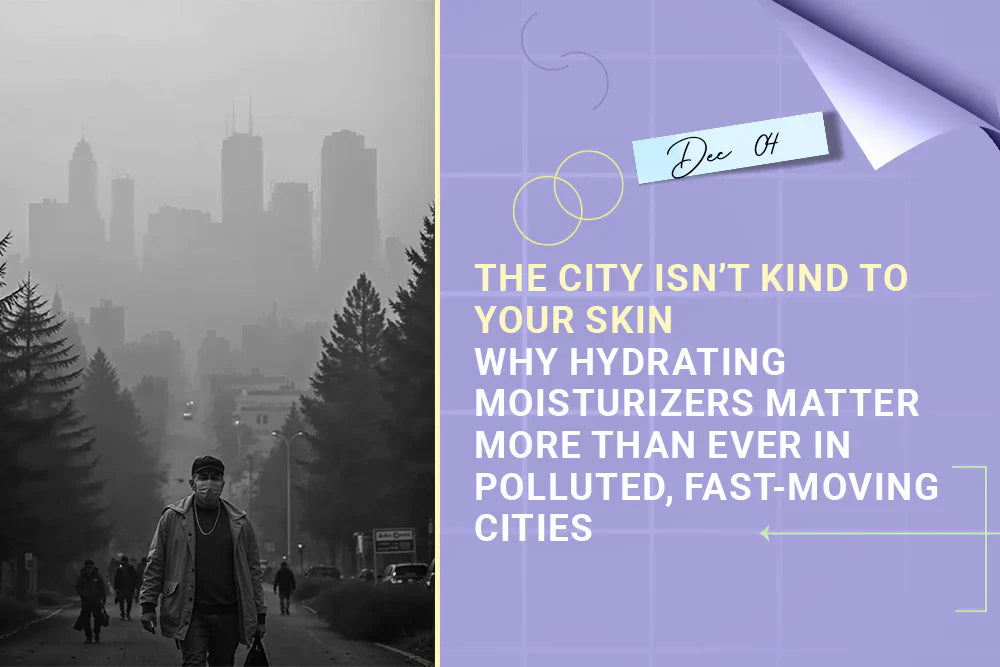



Your skin forms your first line of defense as the outermost barrier, which means it sustains damage when exposed to environmental aggressors like pollution, dust particles and UV rays. The more damage it sustains, the more its effects show up on your skin over time.
Both indoor and outdoor pollution are the biggest health risks for humans. Just because you don’t see it, doesn’t mean it’s not actively damaging your skin.
Particle pollution from fine particulates like PM2.5 and PM10, permeate the air when overall air quality is extremely poor. These particles are small enough to penetrate the skin barrier and have harmful effects on overall skin health.
Much like how repeated exposure to UV rays causes sun damage, repeated skin exposure to particular matter/PM2.5 can worsen skin health from within in several ways:
1. Damages the Skin Barrier
These tiny particles penetrate the skin barrier and cause oxidative stress, which accelerates aging, increases inflammation and disrupts key components of the skin barrier [dysregulates production of essential proteins that keep the skin looking healthy.]
A compromised skin barrier is more prone to inflammation, redness, breakouts, hyperpigmentation and sun damage. Since high levels of air pollution actually slows down the skin’s ability to defend itself, and increases chances of irritation. A damaged skin barrier also leads to worsening acne, psoriasis and eczema.
2. Clogged Pores
Particular matter often settles on the surface of the skin, getting lodged in pores and mixing with oil and dirt. This results in more clogged pores, blackheads and worsens acne breakouts. More pollution = more acne.
3. Dehydrates the Skin
Repeated exposure to particular matter also strips the skin of its natural oils, weakening protection and increasing water loss from the surface of the skin. This leads to the skin looking flat, dull and dehydrated, often increasing the appearance of wrinkles and lines on the skin. Dehydrated skin often feels tight and dry to the touch.
4. Accelerates Skin Ageing
Air pollution increases oxidative stress, which leads to cellular damage and hinders skin regeneration.
This happens because PM2.5 & PM10 particles that settle on the skin and penetrate the skin damage cells and cause essential proteins like collagen and elastin to break down faster, these are the main components responsible for the firm and youthful appearance of the skin. Faster collagen breakdown means more sagging, less elasticity, more prominent wrinkles and the appearance of fine lines in areas like the forehead and eyes. The skin loses its youthful glow and tautness.
5. Worsens Existing Inflammatory Skin Conditions
Troposperic ozone exposure and increased inflammation have been linked to worsening rashes, allergies, atopic dermatitis, psoriasis, eczema and other inflammatory skin conditions. Repeated exposure to air pollution triggers and even increases the risk of developing skin diseases.
Read More: Why Rosacea Gets Worse in Winter

How to Protect Skin from Pollution?
Dermatologists recommend adapting an anti-pollution skincare routine to help minimise day-to-day damage. Additionally, shielding skin from dust and pollution, using a mask, staying indoors and regularly using sunscreen are some useful measures you can adopt to protect your skin.
What is Anti-Pollution Skincare?
Any skincare that helps your skin combat pollution, damage and safeguard it from environmental aggressors. Broadly speaking, any skincare product that is rich in antioxidants, barrier-friendly or damage prevention like safely formulated sunscreen can be considered anti-pollution sunscreen.
3 Components of an Anti-Pollution Skincare Routine
1. Antioxidants [Vitamin C, Glutathione, Vitamin E]
Antioxidants are essential components in nutrition and skincare that help the body combat oxidative stress. Since the human body doesn’t create Vitamin C, it is important to include vitamin C-rich sources to your diet and skincare to combat oxidative stress [the process by which pollution causes cells to age and wear out.] Popular formats include Vitamin C serums, Vitamin C & Glutathione supplements or a Vitamin C-infused sunscreen.
2. Barrier Restoring Ingredients [Ceramides, Peptides,NMFs, Urea]
The outer layer of the skin is what determines if your skin is protected. A damaged skin barrier = deteriorating skin health. In addition to repairing your skin barrier, rebuilding the skin barrier, especially when exposed to high pollution levels, becomes essential.
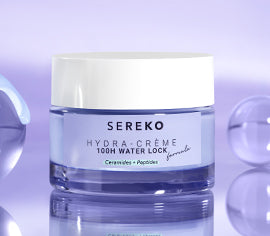
Ingredients that comprise components of the skin can help restore and rebuild skin barrier, therefore healing and protecting the skin. Ingredients like Ceramides rebuild the skin barrier, while peptides help the regenerate and repair damaged cells, while Urea is an essential part of NMFs [natural moisturizing factors], which also comprise urea and lactic acid naturally occur in the skin and may be applied topically to work with ceramides to restore skin barrier health.
When it comes to barrier care, consistency is key. It takes a whole year for a damaged skin barrier to heal. For the face, we recommend ceramide moisturizers, Ceramide infused sunscreen, and NMF Moisturizer. For the body, we recommend using a urea-infused body wash & lotion to help restore and hydrate the skin.
3. Sun Protection
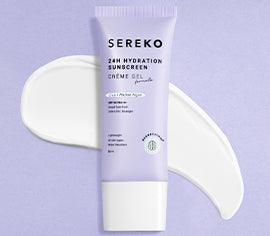
Any sunscreen that rates SPF 30-50 and has PA+++ protection offers adequate sun protection. Additionally, UV rays don’t just cause oxidative stress, they also accelerate oxidative stress and damage caused by some pollutants.
Sunscreens formulated with new gen filters and mineral filters are more effective and safe to use. Avoid sunscreens with outdated filters like oxybenzone, octinoxate (octyl methoxycinnamate), homosalate, octisalate, and octocrylene - these cannot compete with new gen sunscreens in terms of broad spectrum protection and stability.
Sunscreens that are infused with antioxidants offer additional protection and repair. We recommend going for formulas that are infused with ingredients that are hydrating, barrier friendly and easy to re-apply for maximum protection.
Conclusion
Protecting your skin against pollution is essential, especially if you’re someone who is out and about a lot. You don’t need a lot of products to create an anti-pollution skincare routine, you just need the right ones that A) suit your skin type, and B) effectively address your skin concerns.
Write to us at info@serekoshop.com for more personalized recommendations or any questions you may have.