


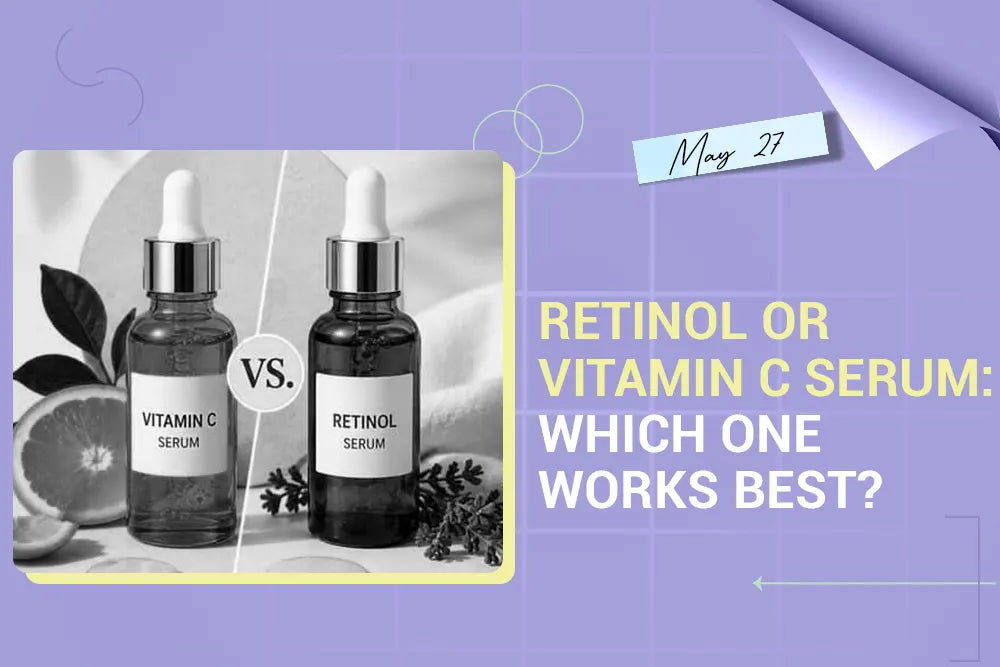
Retinol and vitamin C are both gold-standard ingredients in skincare. However, choosing between retinol vs vitamin C serum can feel like solving a complex puzzle because their interaction with skin is completely different.
While one is known for its anti-ageing benefits, the other is loved for its skin brightening properties.
So how do you decide between the two? Let’s answer that by understanding the basics of both ingredients.
What is Retinol?
Retinol is a derivative of vitamin A. When you apply it to your skin, it converts into retinoic acid, an active form that signals your skin to behave more youthfully. Because it works deep within the skin’s structure, it is widely considered one of the most effective ingredients for correcting visible signs of aging.
Retinol Benefits for the Skin
Retinol works by accelerating your skin’s natural cell turnover process. By helping your skin shed old, damaged cells more efficiently, it reveals a fresher layer beneath.
This process also stimulates collagen and elastin production, which firms the skin and helps soften the appearance of fine lines, wrinkles, and rough texture.
What is Vitamin C?
Vitamin C is a potent antioxidant, most commonly found as ascorbic acid in skincare. It acts as a shield, protecting your skin from the free radicals generated by sun exposure, pollution, and daily stress.
While pure forms can be unstable, many modern formulas use derivatives that are more stable and easier for your skin to absorb.
Vitamin C Benefits to the Skin
Vitamin C serum benefits for the face center on protection and radiance.
It is essentially your skin’s daily bodyguard. It neutralizes environmental damage that leads to premature aging. It also helps inhibit the overproduction of melanin, which is the root cause of dark spots and uneven tone. By boosting collagen synthesis, it also supports your skin’s structural integrity, keeping it looking firm, bright, and vibrant.
Vitamin C vs Retinol for Skin Side-by-Side Comparison
When deciding on retinol or vitamin C, which is better for your unique skin goals, it helps to see how they compare:
-
Anti-Aging: Retinol is superior for correcting deep wrinkles and structural loss, while vitamin C is excellent for preventing early signs of aging.
-
Brightening: Vitamin C is the clear winner for fading dark spots and hyperpigmentation.
-
Texture: Retinol works more effectively to refine pores and smooth out rough, uneven skin patches.
-
Sensitivity: Vitamin C is generally better tolerated by sensitive skin types, whereas retinol may require a "getting used to" period.
Can You Use Vitamin C and Retinol Together?
Yes, you absolutely can, but the timing is everything. Because they have different pH needs and functions, most experts recommend keeping them apart. Use your vitamin C serum in the morning to defend your skin against the day's environmental stressors. Reserve your retinol for your evening routine, when it can work in harmony with your skin’s natural overnight recovery cycle.
How to Choose Between Vitamin C and Retinol
Your choice should be based on your current skin goals:
-
Choose Vitamin C if: Your main concerns are dullness, dark spots, or if you want to start a proactive, preventative routine.
-
Choose Retinol if: You are looking to correct existing fine lines, deep wrinkles, or rough skin texture.
-
Choose Both if: You want a comprehensive routine that manages both daily protection and long-term structural repair.
Unlock Your Glow: The Power of Targeted Care

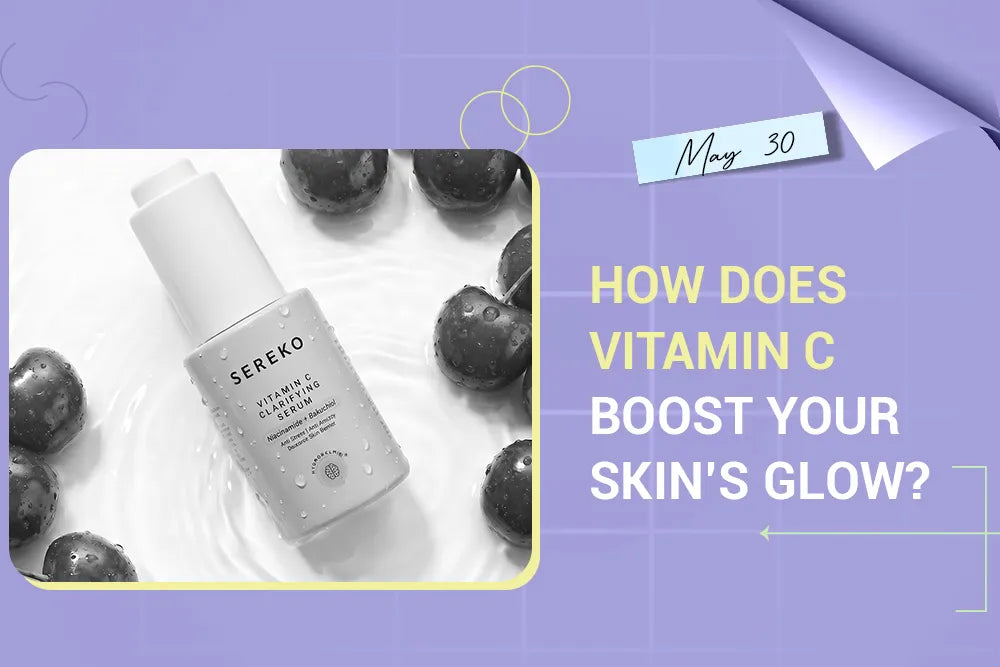
While choosing which serum is better for glowing skin, look for a formula that balances potency with stability. Our Vitamin C Clarifying Serum uses acerola cherry to brighten dullness and even tone. Infused with bakuchiol—a gentle, natural retinol alternative, it firms skin and improves elasticity without the redness or irritation often associated with traditional retinoids. Niacinamide and hyaluronic acid round out the formula to fade pigmentation and provide deep, plumping hydration.
Making the Right Choice for Your Skin
Vitamin C and retinol are both transformative, yet they serve different roles. Vitamin C acts as your daily protector for a radiant, even tone, while retinol serves as the architect for smooth, firm, youthful skin.
By understanding the difference between retinol and vitamin C, you don't have to choose; you can use them together to give your skin exactly what it needs to look its absolute best.